Making Defendants Pay For Ankle Bracelets Is The Functional Equivalent of Cash Bail

Making Defendants Pay For Ankle Bracelets Is The Functional Equivalent of Cash Bail

The United States criminal justice system currently holds “almost 2.3 million people.” Out of the 2.3 million people incarcerated, 612,100 are held in state jails. Out of those 612,000 inmates, 462,000 have not been convicted of any crime. Shockingly, only 24% of those being held in state jails have actually been convicted of a crime. Statistically, over “74% of people held by jails [have not been] convicted of any crime” and are being held in pre-trial detention.

How Copyright Law Perpetuates the Lack of Diversity in Comics

How Copyright Law Perpetuates the Lack of Diversity in Comics

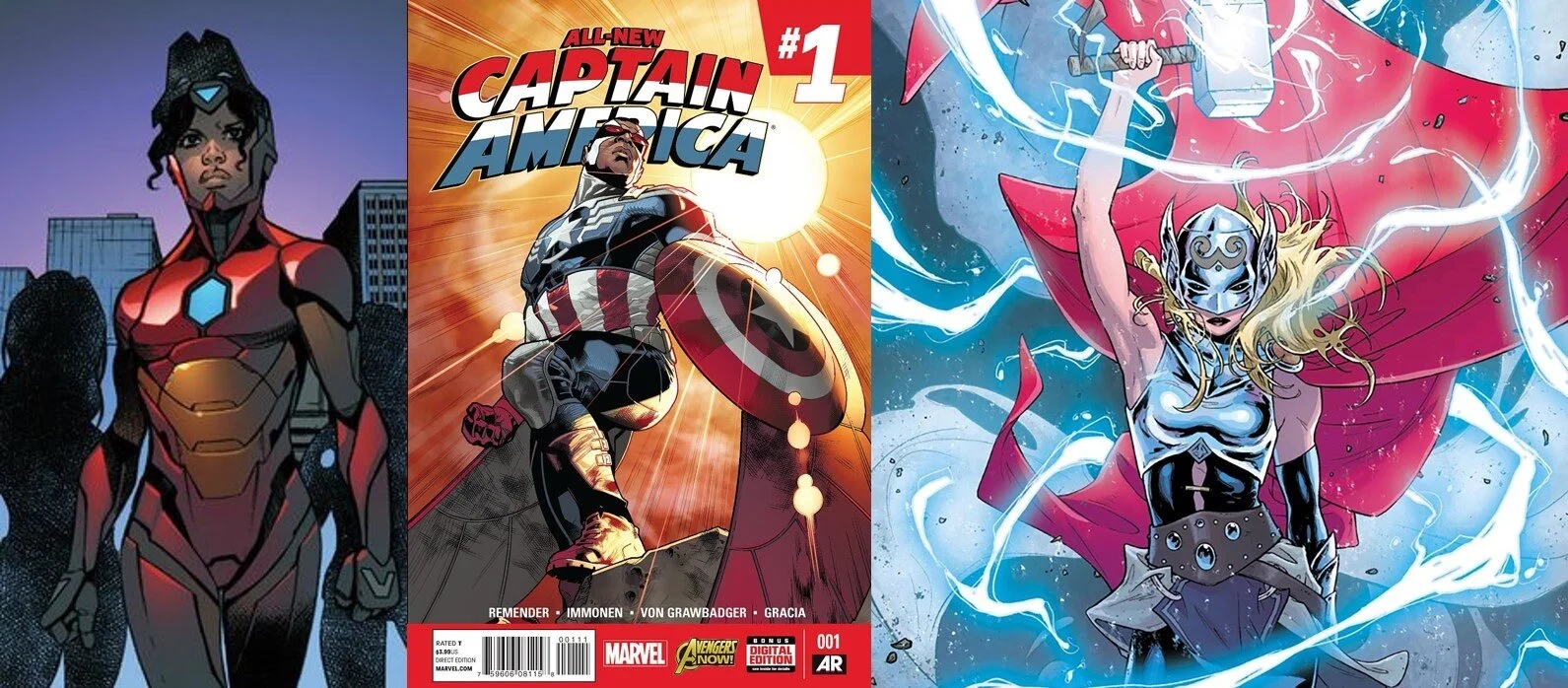
In 2015, Marvel Comics announced a revamp of its publishing line dubbed the “All-New, All-Different” Marvel.  The initiative replaced the white, male versions of its longstanding superheroes with members of groups underrepresented in the superhero genre.  The mantle of Captain America passed from Steve Rogers to the African-American Sam Wilson.  The Norse-god Thor was replaced with a female goddess.  Miles Morales—an alternate version of Spider-Man of Afro-Latino heritage introduced several years earlier—received new prominence, and the Korean-American teenager Wolfgang Amadeus Cho supplanted Bruce Banner as the Hulk.  The titular armor of Iron Man now protected a 15-year-old African American girl named Riri Williams.  Just two years later, in 2017, Marvel announced yet another rebranding, known as “Legacy,” that restored most of its characters to their traditional white male identities.  Around the time of that announcement, David Gabriel, one of the company’s vice presidents, explained that comic fans “didn’t want any more diversity…. We saw the sales of any character that was diverse, any character that was new, our female characters, anything that was not a core Marvel character, people were turning their nose up against.”

It’s Time to Pass a Rights of Nature Constitutional Amendment

It’s Time to Pass a Rights of Nature Constitutional Amendment

The natural environment is vital to human existence. We rely on it for oxygen, sustenance, and shelter. We crave it for sports, hobbies, and relaxation. Humans cannot live without nature because we are a part of it. Nature endured long before the evolution of homo sapiens. Yet we often treat the environment as the “other”; we act as though it is something apart from us rather than something with which we co-exist. Isn’t it time we accorded nature the rights we accord ourselves? Deep Green Resistance, an environmental grassroots organization, certainly thought so and even took legal action to make these rights a reality.

Big Tech: Where Did All the Women Go?

Big Tech: Where Did All the Women Go?

It’s 2019 and you are a new mom who just returned to work at Microsoft; you’ve been working there for the last six years. You see no advancement and no increase in pay or responsibilities in your future. In fact, when you tried to push for a promotion, your manager told you that he did not want to “waste” a promotion on you in case you became pregnant again. You have the same job you have had for the past six years, while your male colleagues who started at the same time are now so far ahead you could never catch up. You have thought about options to advance your career. Finding no solution, you send an email asking your female colleagues for career advice. Imagine your surprise when dozens of women reply to your email sharing their own complaints about repeated discrimination and harassment, which the Human Resources department has ignored. Would it at all surprise you to learn that something very similar actually did happen at Microsoft not too long ago? How did we get here?

The Fight Against Increasing Racial Disparities: Comcast v. NAAOM

The Fight Against Increasing Racial Disparities: Comcast v. NAAOM

On March 23, 2020, in Comcast Corp. v. National Association of African-American Owned Media, the Supreme Court unanimously held that racial minorities have to allege facts suggesting “but for” causation in order to bring a claim under 42 U.S.C. § 1981 for race discrimination in contracting. This is a devastating blow to would-be civil rights litigants, particularly African Americans. Long marginalized by society due to systemic racism, many African Americans have slim to no protections under federal law and no way to enter essential sectors of public and private life, such as housing, education, healthcare, and even certain job opportunities.